
Naval route guide
Last updated October 4, 2026
Dynamic Weather: Read the Sea Before It Reads You
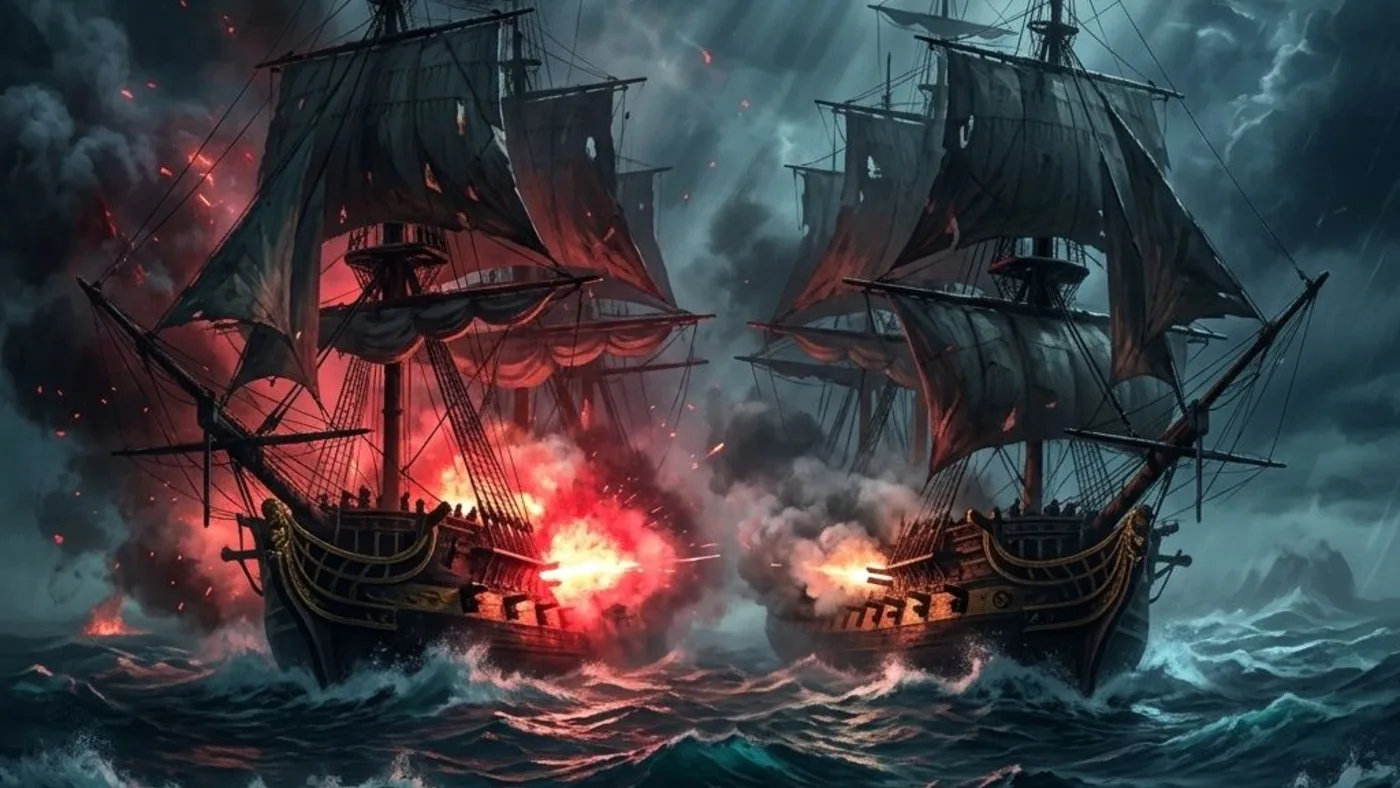
Dynamic weather changes the safe distance, visibility, and escape space around the Jackdaw. Treat a waterspout or lightning front as a route signal: slow the approach, move toward an identified port or open-water line, and only resume a fight when the same opening can be repeated without the weather becoming the first failure.
Route decision
Signal → reroute → retest
Name the weather hazard, the nearest safe port, and the direction you need to keep open before committing to combat or a long crossing.
The Jackdaw reaches the next waypoint, or the encounter is completed with the weather recorded as a controlled variable instead of an unexplained loss.
Changing course, ammunition, and ship upgrades together makes a weather failure impossible to diagnose and can send the Jackdaw into a worse sea state.
Player workbench
Signal → reroute → retest
Weather is part of the route, not background decoration. Use the first visible hazard to decide what should stay stable and what should change.
- MarkChoose the destination and a port or open-water fallback before leaving.
- ReadObserve wave, wind, waterspout, and lightning signals during the first minute.
- ArriveSave the route only after the destination marker and ship state are both stable.
Decision table
Choose from the situation in front of you
| Situation | Decision | Why |
|---|---|---|
| Open-water crossing with a clear port ahead | Keep the heading | A known exit is safer than steering toward an unverified marker in worsening weather. |
| Waterspout crosses the planned fight line | Delay the fight | Let the hazard pass or create a wider approach so the first exchange is readable. |
| Lightning and escort pressure arrive together | Break contact | Separate environmental damage from enemy damage before choosing an upgrade. |
| Weather interrupts a route twice | Change the departure window or port | A route that fails at the same environmental point needs a different start condition. |
Weather test card
Separate the sea hazard from the ship problem
Use one encounter as a controlled reroute. Keep the Jackdaw setup and target stable while you change the weather approach.
-
Before departure
Name the exit
Record the intended heading and a reachable port or open-water fallback before leaving the current waypoint.
Proof: You can point to a fallback without steering into the hazard or an escort group.
-
At the first hazard
Pause the fight line
If a waterspout crosses the approach, widen or delay the attack; if lightning and enemy pressure overlap, break contact before diagnosing damage.
Proof: The first source of hull loss is recorded as weather, enemy fire, or both—not guessed from the final hull bar.
-
On the next attempt
Move the start, not the build
Keep target, ammunition, and upgrade lane fixed; change the departure point or wait for a clear opening.
Proof: A cleaner opening isolates whether weather routing or ship preparation is the remaining blocker.
Stop ruleIf the same hazard repeatedly closes the escape side, return to the last safe waypoint and choose another departure line before changing several ship upgrades at once.
How to use it
Keep weather as one variable
Use the same target, ammunition, upgrade lane, and first heading on two attempts. If only the weather changes and the opening result changes with it, you have a route condition to manage; if the result stays the same, return to the ship build or encounter guide.
Recovery path
If a storm breaks the route
Preserve the last confirmed waypoint and ship state. Open Locations for a safe harbour, then return to Naval with the weather window written beside the encounter instead of restarting the whole map sweep.
Open next
Keep the route moving
The Jackdaw reaches the next waypoint, or the encounter is completed with the weather recorded as a controlled variable instead of an unexplained loss.
Common Questions
Should I change the ship build when weather causes one failure?
Not immediately. Repeat the approach once with the same build and a wider weather-aware route so you know whether the environment or the ship caused the loss.
What counts as a safe weather break?
A safe break has a named port or open-water heading, a clear escape side, and a saved ship state before you resume the original objective.
Does Title Update 1.0.7 prove a weather route is fixed?
It is a reason to retest named issues, not proof that every sea route behaves identically. Confirm the marker, hazard, and result in the current build.